
Resources // Buying
Buying a used scissor lift: a 12-point checklist.
What to look at, in what order, before money moves. The list is built around the things that are expensive to discover afterwards.
How to use this
Inspect the machine, not the listing
A used scissor lift is worth what its condition says it is worth, and condition is not visible in a photograph. Work through the list in order: identity first, then structure, then the systems that cost the most to put right. Take the data plate photo before anything else, because the serial is what makes every later question answerable.
The list
Twelve points
Data plate and serial
Present, legible, and matching the machine. The serial decides configuration and parts for the rest of the machine life. A missing or illegible plate is a serious problem, not a cosmetic one.
Hours, in context
Read the meter, then read the machine. Hours describe duration, not care. Look for wear that agrees or disagrees with the number.
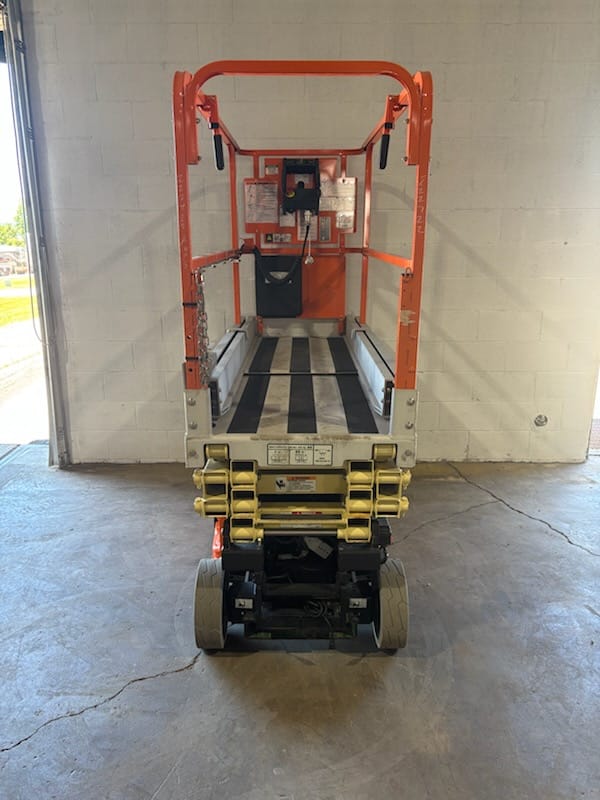
Scissor stack, pins and bushings
Look for play, elongated holes, and noise through a raise and lower cycle. Wear here is normal and measurable; ignored wear becomes structural.
Welds and structure
Cracks or repairs at the stack, base frame, and platform mounts. Fresh paint in one area only is worth asking about.
Cylinders and rods
Scoring, pitting, or a wet film on the rod. A weeping cylinder is a seal today and a cylinder later.
Drift test
Raise it, leave it, come back. Any settling means something is passing oil and it is a load-holding fault.
Batteries and charger
Age, terminal condition, cable integrity, and whether the charger completes a cycle. On electric machines this is the most commonly deferred cost.
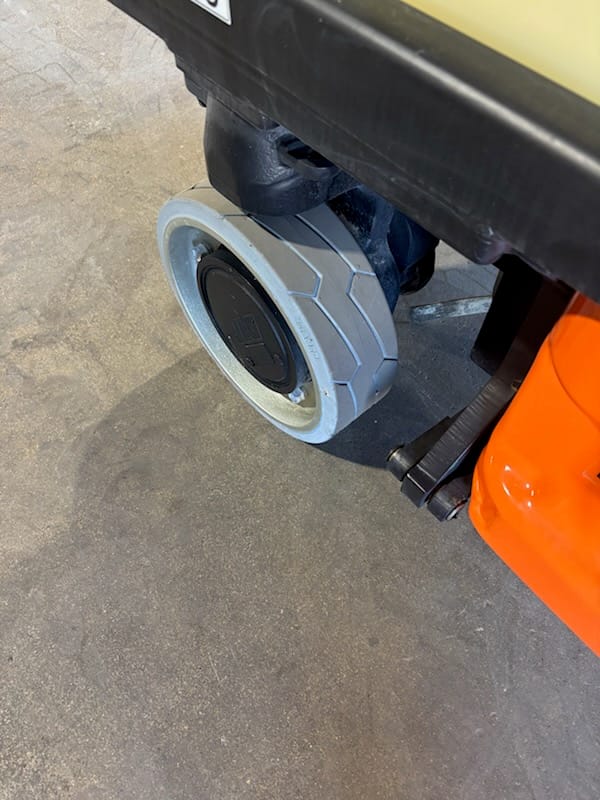
Tires and wheels
Chunking, flat spots, and secure fasteners. Non-marking tires on an indoor machine wear differently than they look.
Controls at both stations
Every function from the ground and from the platform, including the station selector and both emergency stops.
Safety systems
Tilt sensing, pothole protection deploying freely, gate and guardrail interlocks, and the emergency lowering function present and reachable.
Decals and manual
Capacity placards and warning decals legible, operator manual in its holder. Easy to overlook, and a real line item to put right.
Inspection history
Ask for the annual inspection records. What the seller can produce, and how readily, tells you how the machine was owned.
Terms
What AS-IS means, in general terms
Across the used equipment market, AS-IS generally means the buyer accepts the machine in its current condition and the seller makes no promises about what happens after the sale. It is a common and unremarkable term. What it does not do is remove your opportunity to inspect first.
That is the practical consequence: under AS-IS, the inspection is the whole ballgame. Anything you do not find becomes yours on the day the machine changes hands. That is why the checklist front-loads identity and structure, and why the drift test is worth the wait.
If you want a second opinion before you commit, send the model, the serial, and photographs including the data plate. We can tell you what the serial says about configuration and what to look at harder. When a machine does need sourcing instead, machine sales works from your spec rather than from a lot.
After the sale
The findings that follow you home
Not every finding carries the same weight. Some are maintenance you were always going to do; others change what the machine is worth owning. Sorting them at the inspection is more useful than counting them.
Consumables and wear items are the expected ones: tires, batteries approaching the end of their service life, decals, filters, and a set of hoses on an older machine. None of these should surprise you, and all of them are easier to plan for when you find them before the sale rather than after.
Deferred maintenance is the middle tier. Pins and bushings with measurable play, a weeping cylinder, brakes that hold but not confidently. These are repairable and predictable, but each one is a scheduled outage on a machine you presumably bought to use.
Structural and safety findings are the ones worth walking away over. Cracked or repaired welds at the scissor stack or base frame, a bent or fouled pothole bar, interlocks that have been bypassed, or a missing data plate. These are not maintenance. They change what the machine is, and on a used purchase they are the buyer's problem the moment it changes hands.
Parts availability belongs in the same conversation. Older or less common machines can be perfectly sound and still be slow to support, and the serial number is what answers that question. Knowing before you buy whether the machine you are looking at is well supported is worth more than most of the cosmetic condition you can see.
Paperwork
What should come with the machine
Three things should travel with a used scissor lift, and their absence is informative. The operator manual, in its holder on the machine, because it is required to be there and because the load charts live in it. The annual inspection records, which show the machine has been examined rather than merely used. And a clear reading of the data plate, which is the machine's identity for the rest of its life.
Missing paperwork is not automatically a reason to walk. It does mean the condition of the machine has to be established entirely by your inspection, with nothing to corroborate it. Price that reality into the decision rather than assuming the gap will fill itself in later.
Once the machine is yours, the 12-month cycle starts from where it actually is, not from where you would like it to be. If the last documented annual inspection is old or missing, plan on one early: it establishes a baseline you own and it catches whatever the pre-purchase walk did not.
Questions
Buying questions
What does AS-IS actually mean when buying used equipment?
As a general term in the used equipment market, it means the buyer accepts the machine in its current condition and the seller makes no promises about what happens after the sale. It does not remove your ability to inspect before you buy, and it does not make an inspection less important. It makes the inspection the whole ballgame, because whatever you miss becomes yours.
How important are machine hours on a scissor lift?
Useful, but far less decisive than people expect. Hours tell you how long the machine ran, not how hard or how well it was maintained. A well-kept unit with higher hours is usually a better buy than a neglected one with low hours, and hour meters can be replaced or fail. Treat hours as one input among several rather than the headline number.
Should I ask for inspection records?
Yes, and how the seller answers is informative on its own. A machine with a documented 12-month history has been examined by somebody who wrote down what they found. A machine with no records is not automatically bad, but it means everything about its condition has to come from your own inspection rather than from paperwork.
What is the most commonly overlooked item?
Decals and the operator manual. They are easy to skip past because they are not mechanical, but capacity placards and warning decals carry the load limits, and they are required to be present and legible. Replacing a full decal set on a machine that has been repainted is a real line item that buyers rarely account for.
Can you look at a machine before I buy it?
Send the model, the serial, and photos including the data plate and we will tell you what we can from that. The serial identifies the exact configuration, which is what decides parts availability for the life of the machine, and that is worth knowing before money moves rather than after.
Start the intake
Ask about a machine.
Model, serial, and a photo of the data plate get you the fastest, most accurate answer. We reply during shop hours, Monday to Friday, 7:00 AM to 4:30 PM Central.